June 10, 2026
Florida Motorcycle Lane Splitting Accident Claims

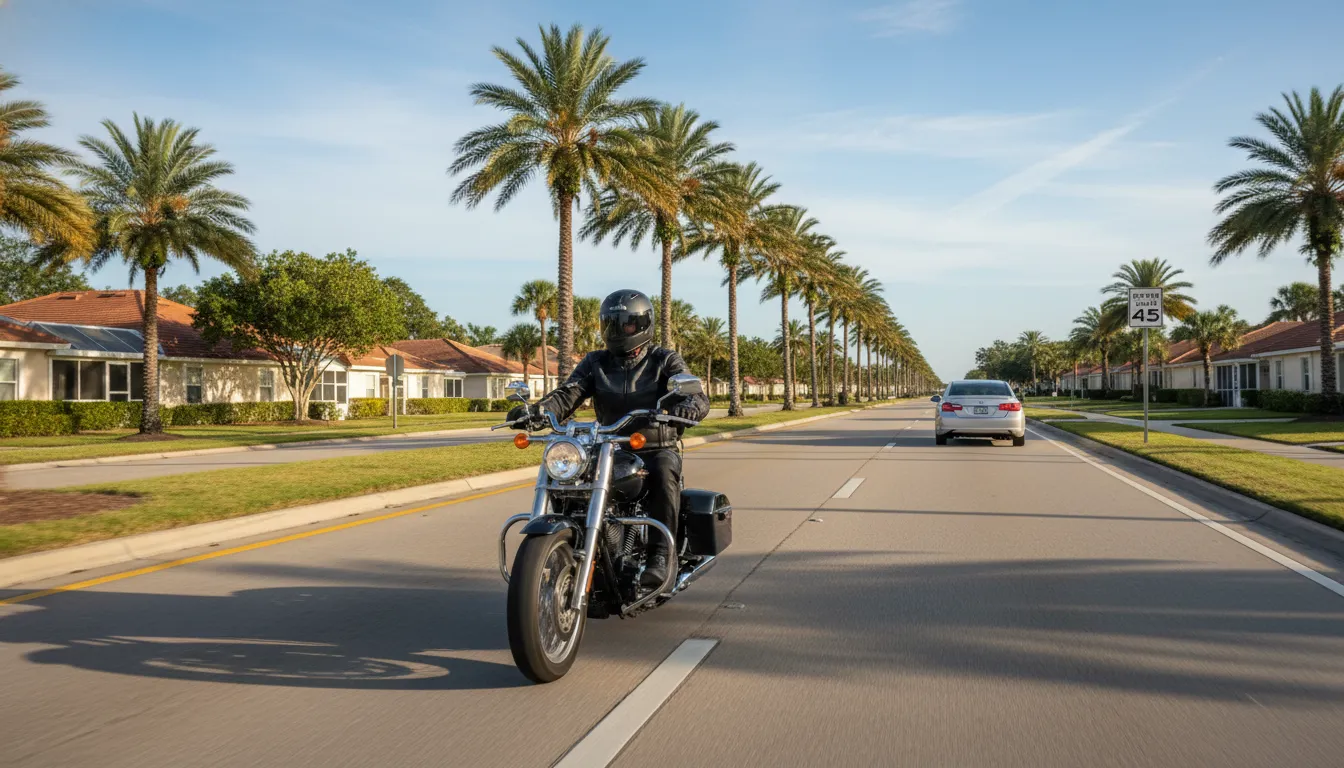
A Florida motorcycle lane splitting accident can leave an injured rider fighting pain while an insurer rushes to assign blame. Lane splitting is prohibited in Florida, but that violation does not erase a driver’s unsafe lane change, distraction, or other role in causing the collision.
Request a free motorcycle accident case review before valuable video and witness evidence disappears.
A Florida motorcycle lane splitting accident does not automatically make the rider solely responsible, although Florida prohibits riding between lanes or adjacent rows of vehicles. Under Florida’s comparative fault rules, the rider’s damages may be reduced by the percentage of blame assigned to the rider. A careless driver may also share fault for speeding, texting, an unsafe lane change, or another action that helped cause the crash. Photos, video, witness statements, the police report, medical records, damaged gear, and the motorcycle’s condition can show what happened before evidence disappears. Insurers may focus on lane splitting to blame the rider. Preserving proof immediately can protect the rider’s account and support a fair fault analysis.
The first question is whether the rider’s position violated Florida law, not whether that violation ends the fault inquiry. Understanding Is lane splitting legal in Florida? sets the foundation for examining each driver’s conduct, comparative fault, and the evidence that can shape a claim. The path begins with the rule itself.
Is lane splitting legal in Florida?
No. Florida law bars a motorcycle rider from operating between traffic lanes or between adjacent lines or rows of vehicles. This rule applies even when traffic is slow or stopped. A rider who moves between cars after a Florida motorcycle lane splitting accident may face close review.
What section 316.209 prohibits
Florida Statute section 316.209 also bars a rider from overtaking and passing a vehicle within the same lane. A violation is a noncriminal traffic infraction punished as a moving violation. Police officers and firefighters performing official duties are exempt from these restrictions.
The ban does not mean riders lack a right to road space. Motorcycles are entitled to full use of a lane, and drivers may not deprive them of that use. Florida also permits no more than two motorcycles to ride abreast in one lane. Those lawful uses differ from riding between lanes or passing a car within its lane.
Lane filtering versus lane splitting
People often use “lane filtering” for moving between stopped or slow vehicles. They may use “lane splitting” for the same move at higher speeds. Section 316.209 does not create a separate allowance based on those labels or traffic speed. If the rider operates between lanes or rows of vehicles, the statutory ban applies.
A rider may still change from one lane to another when the move follows ordinary traffic rules. That is different from staying on the line between lanes to pass vehicles. Riders seeking more context on their rights after a crash can review our Motorcycle Accident Attorney page.
A citation does not decide civil fault
A lane-splitting citation can become important evidence, but it does not automatically settle who caused the crash. Another driver may also have acted carelessly, such as by making an unsafe lane move. Crash evidence must show how each person’s conduct contributed to the impact and injuries.
Under Florida’s comparative fault statute, a court assigns liability based on each liable party’s share of fault. Any damages awarded to a claimant are reduced by that claimant’s assigned share. Our guide to Florida comparative negligence laws explains how shared blame can affect an injury claim.
Who is at fault in a Florida motorcycle lane splitting accident?
Fault in a Florida motorcycle lane splitting accident depends on every person’s actions before the impact. A rider’s lane splitting may support an argument that the rider was careless. It does not erase evidence that a driver also acted carelessly.
Lane splitting and shared fault
Florida law bars a motorcycle from traveling between lanes or adjacent rows of vehicles. It also treats a violation as a moving infraction. The motorcycle lane-use statute gives insurers clear evidence to use against a rider, but the ticket does not decide the whole injury claim.
Florida courts assign liability based on each responsible party’s percentage of fault. That rule requires a review of the driver’s conduct as well as the rider’s conduct. Our guide to Florida comparative negligence laws explains how an assigned share of blame can affect damages.
Driver conduct under review
A driver may share fault after moving into the motorcycle’s path. Investigators look for proof that the driver changed lanes without checking, failed to signal, opened a door, or drove while distracted. These acts remain separate from the rider’s decision to split lanes.
- Lane changes: Vehicle damage, road marks, and video may show which vehicle moved sideways before impact.
- Signals and mirrors: Witness accounts and camera footage may show whether a driver signaled or checked nearby traffic.
- Open doors: Photos and the door’s damage may help show when and where it opened.
- Distraction: Phone records, video, and witness accounts may support or weaken a claim of distracted driving.
Motorcycles are also entitled to full use of a lane under the same Florida statute. That rule may matter when a car crowds a rider who was already within a marked lane. The exact position and movement of both vehicles can change the fault analysis.
Evidence that shows what happened
Insurers may focus on lane splitting and blame the rider first. A sound investigation tests that claim against scene photos, police reports, medical records, bike damage, vehicle damage, and witness statements. Nearby traffic cameras or dashcams may show movements that no witness saw clearly.
Evidence should also establish the sequence of events. A signal may have started after a lane change, or a door may have opened too late for a safe response. A Motorcycle Accident Attorney can preserve available proof and assess each party’s conduct without treating illegal lane splitting as automatic total fault.
How comparative negligence can change your compensation
Fault in a Florida motorcycle lane splitting accident is not always assigned to just one person. A rider may have been between lanes while another driver turned without checking. Each action can matter when insurers, lawyers, or a jury assess responsibility.
Florida’s modified comparative negligence rule
Florida uses modified comparative negligence for most negligence claims. Under the Florida comparative fault statute, damages are reduced by the injured person’s share of fault. A person found more than 50 percent at fault cannot recover damages from the other party.
The 50 percent line matters. A rider found exactly 50 percent at fault may still recover half of the proven damages. At 51 percent, the rider may recover nothing from the other party. This sharp difference makes sound evidence and a careful fault review important.
An insurer may argue for a high fault share, but that position does not settle the issue. The parties can dispute each percentage during a claim. If the case goes to trial, the fact finder may assign the final shares.
A simple fault example
Assume a rider has $100,000 in proven damages after a crash. The amount may include medical bills and lost income, which Florida law treats as economic damages. The table shows how different fault findings could change that amount.
| Rider’s share of fault | Effect of the rule | Possible amount after reduction |
|---|---|---|
| 0 percent | No comparative fault reduction | $100,000 |
| 20 percent | Damages reduced by 20 percent | $80,000 |
| 50 percent | Damages reduced by half | $50,000 |
| 51 percent | More-than-50-percent bar applies | No recovery from the other party |
The table compares possible outcomes at several fault percentages.
This example only shows the fault calculation. It does not predict a settlement or court award. Disputes can also arise over which losses were caused by the crash and what amount the evidence supports. Our guide to Florida comparative negligence laws explains the rule in more detail.
Why lane splitting does not decide fault alone
Florida law bars a motorcycle from operating between lanes or adjacent rows of vehicles. Yet a lane splitting violation does not automatically make the rider fully responsible for a crash. The other driver’s speed, signals, lookout, and movement may also affect fault.
The same Florida motorcycle lane-use law says motorcycles are entitled to full use of a lane. Photos, video, witness accounts, vehicle damage, and the crash report can help show what each person did. The final fault split depends on the facts and available proof.
For example, video may show whether the rider was between lanes before impact. It may also show whether a driver changed lanes without warning. Such details help separate a traffic violation from the actions that caused the crash.
Talk with a Florida motorcycle accident lawyer about fault and the evidence needed to protect your claim.
What should you do after a lane-splitting crash?
After a Florida motorcycle lane splitting accident, focus first on safety and medical care. Then protect the records that may show how the crash happened. These steps can help when an insurer tries to place all blame on the rider.
First steps at the crash scene
-
Get to safety and call 911. Move away from traffic if you can do so safely. Ask for emergency medical help and report the crash to police.
-
Accept medical care. Let emergency workers check you, even if pain seems mild at first. Follow their advice and keep all later appointments, bills, and treatment records.
-
Ask for a police report. Give the officer a clear account without guessing or accepting blame. Get the agency name, report number, and officer’s contact details.
-
Record the scene. If your condition allows, take wide and close photos or video. Capture vehicle positions, damage, skid marks, debris, traffic signals, lane markings, weather, and visible injuries.
-
Find witnesses. Ask anyone who saw the impact for a name, phone number, and email address. Note nearby homes or businesses that may have camera footage.
-
Preserve the motorcycle and gear. Do not repair or discard the bike, helmet, clothing, boots, or damaged electronics. Keep each item as it was after the crash.
-
Report the crash carefully. Notify your insurer, but keep the first report brief and factual. Avoid recorded statements, broad medical releases, or settlement papers before you understand their effect.
Why complete records matter
Photos, video, witness details, and preserved gear can show more than a damaged motorcycle alone. They may help explain vehicle movement, impact points, road conditions, and whether another driver changed lanes. Save copies in more than one secure place.
Lane splitting is prohibited under Florida motorcycle lane-use law, but that fact does not explain every cause of a crash. An insurer may still need to review the other driver’s conduct and all available evidence. Do not alter photos or post crash details on social media.
Insurance calls and legal help
Insurance adjusters may ask questions that frame the rider as the only cause. Be truthful, but do not estimate speed, distance, or injuries when you are unsure. Keep a log of each call, letter, email, expense, missed workday, and medical visit.
A Motorcycle Accident Attorney can review the report, preserve evidence, and handle insurer requests. Counsel can also contact witnesses, request camera footage, and organize medical records before key evidence is lost.
For more detail on counsel’s role, read this guide to working with a Florida motorcycle accident lawyer. Bring your photos, policy documents, bills, medical records, and towing papers to the first meeting. Keep the damaged gear available for review.
Evidence that can strengthen an injured rider’s claim
A Florida motorcycle lane splitting accident often creates two competing accounts of the same few seconds. Strong evidence can show each person’s position, speed, signals, and choices before impact. It can also challenge an insurer’s attempt to blame the rider without examining the driver’s conduct.
Video and digital records
Helmet-camera and dashcam footage may show lane positions, traffic flow, turn signals, and sudden movements. Nearby stores, homes, buses, and traffic systems may also have useful video. These recordings can be erased or recorded over, so requests to preserve them should go out promptly.
Vehicle event data may help when a car stores details about braking or speed. Phone records obtained through lawful discovery may show whether a driver was using a device near the crash. A rider should save original camera files and avoid editing, cropping, or posting them online.
Clues at the crash scene
Photos and measurements can preserve tire marks, debris, gouges, fluid trails, and the final resting places of both vehicles. Damage patterns on the motorcycle and car may help explain the angle and point of impact. Photograph the roadway from several directions, including signs, lane markings, blocked views, and nearby cameras.
Keep the motorcycle, helmet, clothing, and other damaged gear in their post-crash condition. Repairs or disposal can remove clues that an expert may need later. Florida law says motorcycles have full use of a lane, while it also bars riding between lanes or rows of vehicles. Evidence showing where each vehicle traveled can therefore shape the fault analysis.
- Save clear photos, raw videos, receipts, and repair estimates.
- Write down camera locations and business contact details.
- Ask witnesses for names, phone numbers, and brief accounts.
- Preserve damaged gear without cleaning or changing it.
Medical records and witness accounts
Medical records connect the collision to the rider’s injuries, care, symptoms, and recovery needs. They may also document limits that affect work and daily tasks. Keeping appointments and describing symptoms accurately creates a clearer record than trying to recall every detail months later.
Neutral witnesses can describe traffic speed, vehicle movements, signals, and what happened just after impact. Police reports can help find those witnesses, but recorded statements may capture more detail. Because Florida assigns liability based on each party’s share of fault, this proof can affect recovery under Florida’s comparative fault law.
An injured rider should act quickly, but serious injuries may make evidence gathering hard. A motorcycle accident settlement depends on proof that survives close review. Early preservation helps keep missing video, changed road conditions, and fading memories from deciding the claim.
How insurance companies may challenge the claim
The traffic violation argument
An adjuster may treat lane splitting as the whole story in a Florida motorcycle lane splitting accident. Florida law bars riding between traffic lanes, so the insurer may use a citation to shift blame toward the rider. Still, a traffic violation does not explain every action that led to the crash.
The adjuster may also argue that the rider was speeding or hard to see. Those claims can distract from whether a driver changed lanes, failed to look, or left too little space. Florida assigns damages based on each liable party’s share of fault, as this guide to Florida comparative negligence laws explains.
Evidence behind speed and visibility claims
A speed estimate may start as an assumption rather than a measured fact. Photos, video, vehicle damage, witness accounts, and the police report can test that claim. Preserve the motorcycle, damaged gear, and any camera footage before items are repaired, discarded, or recorded over.
Visibility also depends on the full scene. Note traffic flow, lane markings, lighting, weather, nearby signs, and each vehicle’s position. Take wide photos and close views when it is safe. Get witness names and contact details, since a neutral account may clarify what each person could see.
- Save medical records, bills, receipts, and missed-work details in one place.
- Follow the treatment plan and keep a short daily note about pain, limits, and recovery.
- Write down what you remember, but mark uncertain details instead of filling gaps with guesses.
Conversations with the adjuster
Adjusters may compare early comments with later records and focus on small differences. Pain, medication, and stress can make a rushed account incomplete. Keep answers brief and accurate, and do not guess about speed, distance, fault, or the full extent of an injury.
Before giving a recorded statement, ask who requested it, why it is needed, and how it will be used. Review your policy duties and consider getting legal advice before agreeing. A Motorcycle Accident Attorney can help organize evidence and address disputed fault without relying on assumptions.
Document injuries with the same care used for the crash scene. Describe symptoms honestly at each visit and tell providers when a condition changes. Consistent records can show the course of recovery while avoiding claims that treatment gaps or changing descriptions weaken the case.
When should an injured rider speak with a lawyer?
An injured rider should speak with a lawyer as soon as urgent medical needs are under control. Early advice matters most when fault is disputed, injuries are serious, or an insurer requests a recorded statement. A lawyer cannot promise a result, but prompt work can help protect a fair review of the crash.
Early evidence preservation
Road conditions change, vehicles get repaired, and video can be erased. Witness memories also fade. An early investigation can preserve facts before those facts become harder to find.
- Photos and video showing vehicle positions and damage.
- Photos showing skid marks and road conditions.
- The motorcycle, helmet, riding gear, and damaged personal items.
- Police reports and witness contact details.
- Nearby camera locations and available footage.
- Medical records that connect injuries and treatment to the crash.
A lawyer can request available footage, speak with witnesses, and help prevent key items from being lost. This work is important when an insurer claims the rider caused the Florida motorcycle lane splitting accident.
A full review of fault
An allegation of lane splitting does not answer every question about fault. A lawyer can review whether another driver changed lanes, failed to look, sped, or blocked the rider’s lane. The review may also cover road design, sight lines, and each party’s account.
Under Florida’s comparative fault law, liability is assigned based on each party’s share of fault. Clear evidence can help test an insurer’s version of events. A Florida motorcycle injury lawyer can organize that evidence and explain how disputed fault may affect the claim.
Damages and insurer negotiations
A lawyer can also document the harm caused by the crash. That process may include collecting bills, treatment notes, wage records, repair estimates, and proof of future needs. Keeping these records together helps show the claim’s full basis.
Insurers may ask quick questions or make an early offer before the rider knows the lasting impact. Counsel can handle those talks, answer supported requests, and challenge claims that overlook evidence. Riders near Lake County can also review help for Clermont motorcycle accidents when seeking local guidance.
Get local guidance for a Clermont motorcycle accident claim before insurer deadlines or lost evidence limit your options.
Frequently Asked Questions
Is lane splitting legal in Florida?
No. Florida law prohibits operating a motorcycle between traffic lanes or between adjacent rows of vehicles. The same Florida motorcycle statute also bars riders from passing another vehicle within the same lane. Lane splitting can therefore affect both a traffic case and how insurers assess fault after a crash.
Who is liable for a motorcycle lane splitting accident in Florida?
Liability depends on how each person contributed to the collision. A rider’s lane splitting may support an argument that the rider was negligent. However, a driver may also share fault for speeding, making an unsafe lane change, or failing to keep a proper lookout. Police reports, videos, vehicle damage, witness accounts, and other evidence help establish each party’s actions.
What is the penalty for lane splitting in Florida?
Under Florida Statute 316.209, violating the motorcycle lane rules is a noncriminal traffic infraction punishable as a moving violation. A citation is separate from civil liability for a crash. Still, insurers may point to the prohibited maneuver when arguing that the rider caused or contributed to the collision.
How does comparative negligence affect lane splitting accident claims?
Florida’s comparative fault system assigns each responsible party a percentage of blame. Under Florida’s comparative fault statute, a claimant’s damages are reduced according to the fault assigned to that claimant. Lane splitting may increase a rider’s share of fault, but it does not automatically prove that the rider alone caused the crash.
What does Florida law say about lane use for motorcycles?
Florida law gives motorcycles full use of a traffic lane, and drivers may not deprive a motorcycle of that space. The state motorcycle lane-use statute permits up to two motorcycles to ride abreast in one lane. It does not allow a rider to travel between lanes or pass a vehicle within the same lane.
Ready to protect your Florida motorcycle claim?
Waiting can leave important crash evidence harder to find and give insurers more room to blame you. Starting now helps your legal team secure records, contact witnesses, and document the motorcycle before key details disappear. Early review also gives you time to understand your options and respond to questions about lane splitting or comparative fault.
Do not let delay weaken your ability to show what happened or challenge an unfair version of the crash. Getting clear guidance now can help you avoid preventable mistakes while you focus on medical care and recovery. Ready to protect your claim? Request a free motorcycle accident case review to discuss the evidence, fault questions, and practical next steps with Injury LawStars.
About the Author
Katie Miller, Esq.
Managing Partner · Injury LawStars
Attorney Katie Miller was once an injury victim herself. After a car accident in 2016 that required spinal surgery and a 13-month recovery, she turned her experience into a mission: fighting for people who are hurting. With 17+ years of legal experience and over \$45 million recovered for clients, Katie brings both professional expertise and personal understanding to every case.