July 9, 2026
Florida Golf Cart Accident Laws: Liability and Insurance Guide for 2025

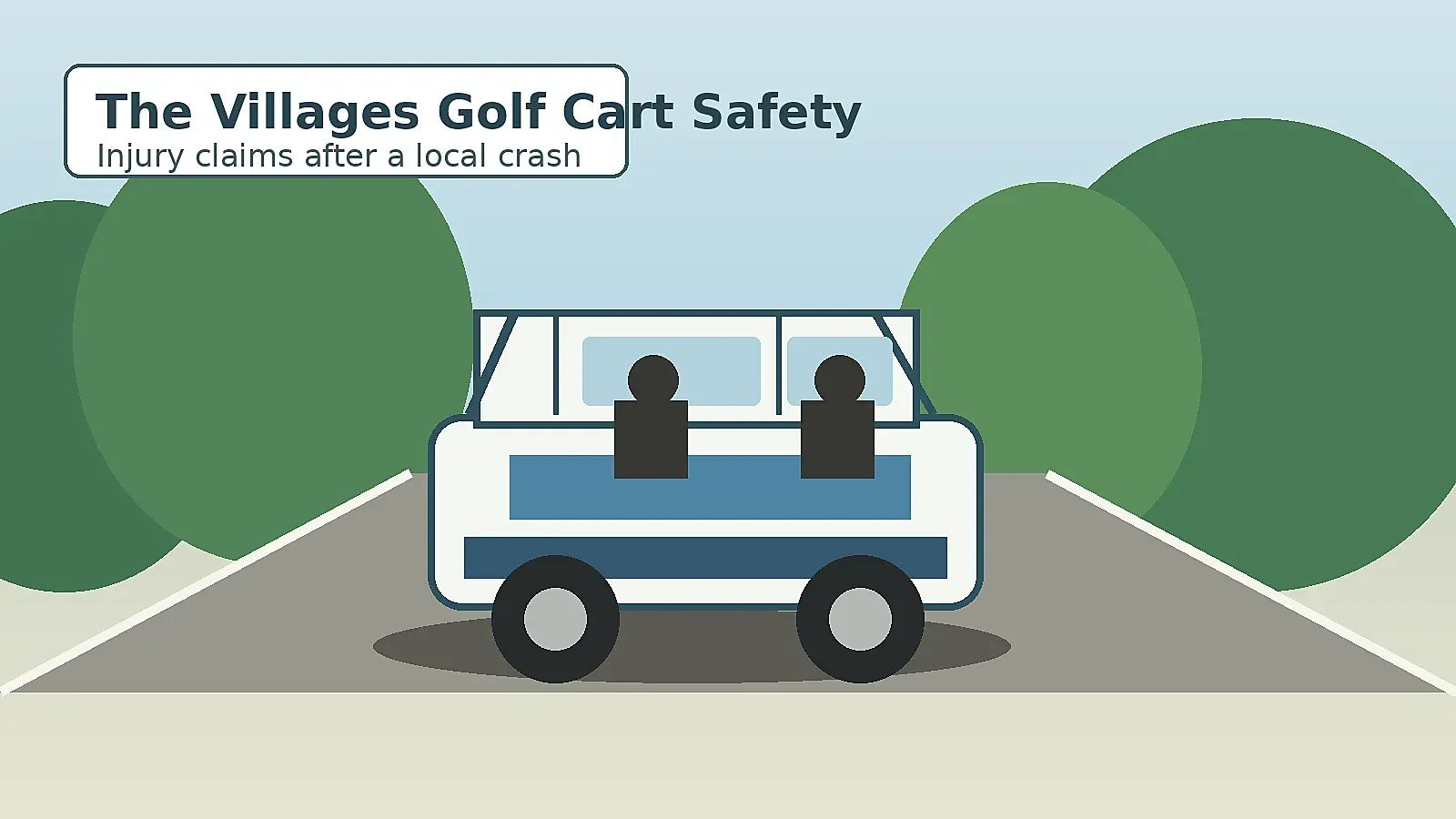
Golf cart travel in The Villages is more than a hobby; it is a primary way of life. For residents in Lake County, these vehicles provide daily freedom but carry serious legal risks.
Florida golf cart accident laws regulate how these vehicles operate on public roads and show who is responsible for crash damages. The Florida Department of Highway Safety and Motor Vehicles defines a golf cart as a motor vehicle for golf course use. These carts cannot exceed 20 miles per hour. Owners must understand that Florida considers golf carts dangerous instrumentalities. This means you may be liable for injuries even if you were not the one driving. Standard carts do not require registration. However, low speed vehicles (LSVs) that reach 25 miles per hour must be titled and insured. If a crash occurs, victims can seek payment for medical bills through a personal injury claim. You must file within the two year statute of limitations.
📞 Free Consultation — Call Now
Were you or a loved one injured in a golf cart accident in Florida? Our experienced legal team can help you understand your rights and pursue the compensation you deserve. No fees unless we win.
Knowing your legal rights is vital for staying safe in Central Florida retirement areas. Our founder, Katie Miller, knows the road to recovery because she has walked it herself. The following guide breaks down Florida’s golf cart laws, liability rules, and insurance requirements step by step.
Florida Golf Cart Accident Laws: What Are Florida Golf Cart Laws?
Florida is a top place for golf cart use. Many people in older towns use these carts to get around every day. But state laws are strict about where and how you can drive them. If you get into a crash, knowing these rules is key. You might need help from a golf cart accident lawyer to handle your claim. Our team knows Florida golf cart accident laws and can help you recover.
Golf Carts vs. Low-Speed Vehicles
Florida law splits small vehicles into two main groups. First, there are standard golf carts. The Florida Dept. of Highway Safety says these are for golf or fun. They are not built to go faster than 20 miles per hour. Most carts used in Florida senior parks fit this group.
The second group is low-speed vehicles, or LSVs. These are four-wheeled vehicles that reach speeds between 20 and 25 miles per hour. Because they are faster, they have more rules. You must title and register your LSV just like a car. You also need a license plate. Most importantly, you must have insurance. You need at least $10,000 in personal injury protection and $10,000 in property damage liability.
Some people turn their basic golf cart into an LSV. You must add safety gear like headlamps, turn signals, and seat belts. You also need mirrors and a windshield. Then, you must title and register it before you use it on faster roads.
| Feature | Standard Golf Cart | Low-Speed Vehicle (LSV) |
|---|---|---|
| Max Speed | 20 mph | 25 mph |
| Registration Required | No | Yes |
| Insurance Required | No (check HOA rules) | Yes (PIP + PDL) |
| Driver License Needed | No (18+, with photo ID) | Yes |
| Roads Allowed | ≤30 mph, designated only | ≤35 mph |
| Safety Equipment | Basic (headlights if night) | Seat belts, turn signals, mirrors |
Where You Can Drive Your Cart
You cannot drive a standard golf cart on just any road. State law says you can only use them on streets marked for carts. These roads must have a speed limit of 30 miles per hour or less. Many towns in Florida have special paths or marked lanes for cart traffic. It is key to look for signs that say carts can share the road.
Low-speed vehicles can go on more roads. You can drive an LSV on streets with speed limits up to 35 miles per hour. This makes them good for getting around large towns. But you must still follow all traffic signs and signals. If you are hit by a car, think about hiring a golf cart accident lawyer to help you.
Driver Rules and the 2023 Law
Florida passed a new law on October 1, 2023. This law changed who can drive a cart on public roads. Now, anyone under 18 must have a driver license or a permit. This change aims to reduce crashes. It ensures that those at the wheel know the road rules.
For adults 18 and older, the rules are not the same. You do not need a license to drive a basic cart. But you must carry a photo ID at all times. This could be a state ID or a passport. If you drive an LSV, you must have a license no matter your age. These rules help keep all safe as cart use grows.
Who Can Be Held Liable in a Florida Golf Cart Accident?
Finding out who is at fault after a golf cart crash can be hard. In Florida, many parties may share the blame. Florida uses a modified comparative negligence system. You can still get money for your injuries if you are not more than 50% at fault for the crash. This makes it vital to find every person or company that helped cause your harm.
The Dangerous Instrumentality Doctrine
Florida law treats golf carts as “dangerous instrumentalities.” Under Florida Statute 320.01, a golf cart is a motor vehicle made for use on a golf course that goes 20 mph or less. This legal rule means that a golf cart is a tool that can cause bad harm if used in a poor way. Because of this, the owner is often liable for any crashes caused by anyone they let drive it.
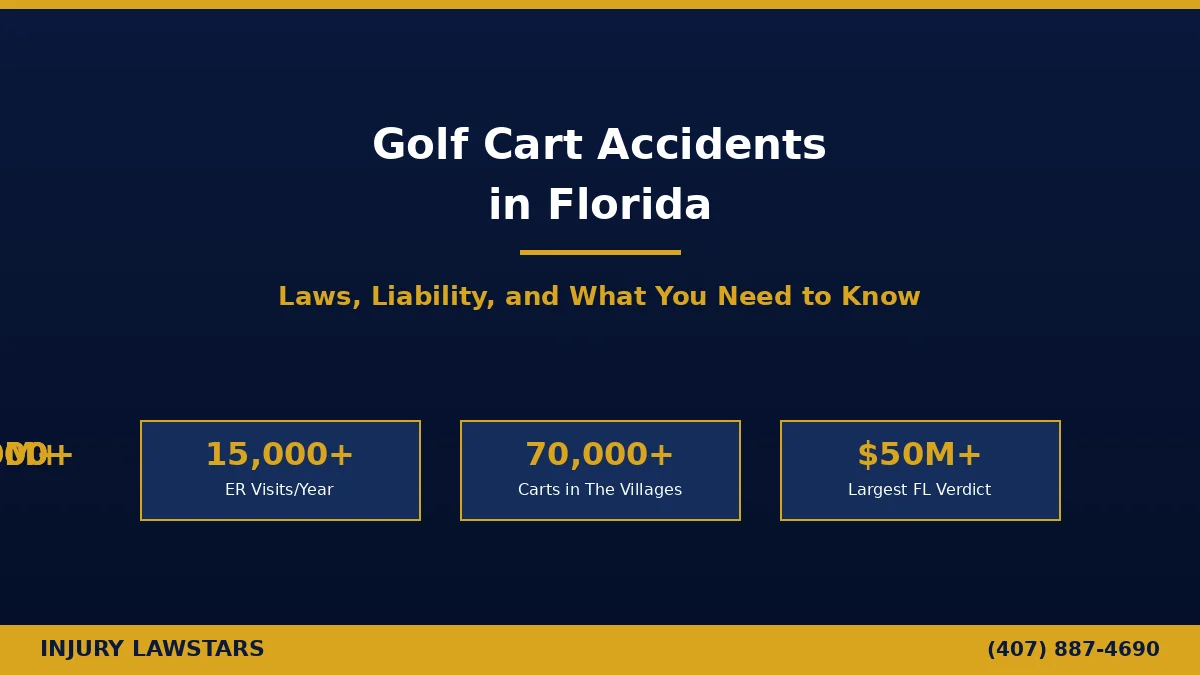
Even if the owner was not in the cart at the time, they may still be on the hook for costs. This type of liability can lead to huge legal costs for owners. A report in the Florida Bar Journal notes a case where a court awarded over $50 million. This huge sum went to a victim and his family. The court found the owner was at fault for letting an unfit driver use the vehicle.
Negligent Entrustment and Parent Liability
Liability also falls on those who lend their carts to people who should not drive them. This is called negligent entrustment. If an owner lets an unfit or young person drive, the owner is at fault for what happens next. This often applies to parents who let their children or guests drive a cart on public roads.
Since October 2023, Florida law has stricter rules for young drivers. Teens under 18 must have a valid permit or license to drive a golf cart on public streets. If a parent lets a child without a license drive and a crash happens, the parent may face a lawsuit. Holding the right people liable is key to getting the help you need to heal.
Property Owner and Premises Liability
Sometimes, the crash is not just about the driver. The state of the land or road can also play a role. If a golf course or a town like The Villages has a hidden risk, the property owner might be liable. This falls under the area of premises liability law.
Common risks include poorly marked paths, steep drops without rails, or blind turns. If the property owner knew about a risk but failed to fix it, they may owe you for your medical bills. Our team can help you find out if a property owner’s neglect led to your crash. We handle the hard legal work so you can focus on getting well.
The Dangerous Instrumentality Doctrine and Golf Carts
Florida law uses a rule called the dangerous instrumentality doctrine. It says the owner of a dangerous tool is at fault for the harm it causes. In Florida, courts view cars and trucks as dangerous tools. This rule also applies to golf carts. If you let someone else drive your cart, you are at fault for their actions. This is true even if you were not in the cart. Under Florida golf cart accident laws, owners in The Villages must know this risk before they loan their carts.
Owner Fault for Permitted Use
When you let a guest use your cart, you share the blame for any crash they cause. This is known as vicarious liability. If a driver hits a person, the victim may sue the owner. A golf cart accident lawyer in The Villages can help you find who is at fault. The law treats a golf cart as a dangerous tool because it can cause severe harm.
This rule is vital for those who let kids drive. If a child causes a wreck, the owner faces the full legal cost. You should check your insurance to see if it covers other drivers. For more on safety rules, see the FLHSMV safety site for state standards.
Legal Caps on Damage Costs
Florida law gives limits on how much an owner must pay. Under Florida Statute 324.021, there are caps for people who loan a vehicle. The limits are $100,000 per person and $300,000 per crash for bodily injury. There is also a $50,000 cap for property damage. These caps act as a shield to protect your home and cash.
But these shields have limits. If the driver has no insurance, the owner may face a higher bill. The owner might pay up to $500,000 in extra money costs. This is why many victims hire a The Villages golf cart crash lawyer to seek fair pay. We help victims find the best way to get pay for their harm and medical bills.
The Motor Vehicle Type Risk
There is a catch regarding the liability caps. The law only gives these limits if the golf cart is a motor vehicle. In Florida, a standard golf cart is often not seen as a motor vehicle. If a judge finds the cart does not fit this legal group, the caps might not apply. This could lead to unlimited liability for the owner. You might be on the hook for every dollar of the loss.
One small crash could lead to a huge debt. This risk is why some owners register their carts as Low-Speed Vehicles (LSVs). LSVs must have safety gear and insurance. If your cart is an LSV, it is a motor vehicle. This ensures you get the protection of the legal caps. Always check your cart type and insurance before you let a guest drive. Proper planning is the best way to protect your assets from a lawsuit.
Insurance Requirements and Coverage Gaps for Florida Golf Carts
Florida golf cart accident laws treat vehicles differently based on their top speed and design. While standard golf carts often have fewer rules, low speed vehicles must meet strict state standards. You must know which category your vehicle falls into to avoid costly legal gaps. Many owners assume their current plans cover them, but a single crash can prove that wrong.
Low speed vehicle insurance rules
If your vehicle travels between 20 and 25 miles per hour, Florida law labels it a low speed vehicle. These four-wheeled machines must be titled and registered to drive on public roads. According to the Florida Highway Safety and Motor Vehicles department, they also require specific insurance. You must carry personal injury protection and property damage liability coverage just like a car.
Failing to insure these vehicles can lead to license suspension or heavy fines. If you are in a crash, a golf cart accident lawyer can help you look at your policy. We check if your coverage meets state rules for these faster vehicles. Many people convert carts to these models without updating their insurance, which creates a huge risk.
Exclusions in standard auto policies
Standard car insurance does not always cover a golf cart crash. Some carriers argue that a golf cart is not a private passenger auto. This distinction matters because it can leave you with no help after an accident. The Florida Bar Journal notes cases where major insurers refused to defend owners in court. They claimed the cart did not meet the policy definition of a car.
This gap in coverage is a major trap for owners in retirement areas. You might think your car plan protects you, but the fine print could say otherwise. If you need legal representation for golf cart accidents, we can review these policy terms. Our team looks for ways to hold insurers to their promises or find other paths for pay.
The role of umbrella and home policies
Some people rely on home insurance or umbrella plans for their golf carts. While some home plans offer small limits for carts used on your own lot, they rarely cover road use. An umbrella policy can give you extra protection, but only if the cart is named as a covered vehicle. You should check with your agent to see if you need a separate rider for your cart.
Adding a specialized golf cart policy is often the safest move. This ensures you have funds for medical bills and legal costs if a crash happens. Without the right plan, a victim could sue you personally for their losses. We focus on helping you find every source of money to pay for your care and recovery after a serious hit.
What Compensation Can You Recover After a Golf Cart Accident?
After a golf cart crash, you may face steep bills and big life changes. Florida law allows you to seek money for these losses if another person caused the wreck. This money is called damages. It helps you pay for your needs and get your life back on track. Knowing what you can claim is the first step in your case.
Money for your bills and wages
Most people first think of their medical costs. These bills add up fast after a crash. You can seek pay for hospital stays, lab tests, and rehab. You can also claim pay for the care you will need in the years to come. If your injury keeps you from your job, you can ask for your lost wages. This covers the money you would have made if you were not hurt. It also includes the loss of what you could earn in the future.
Under Florida law, low-speed vehicles (LSVs) must carry Personal Injury Protection (PIP) insurance. This plan helps pay for your medical care no matter who caused the crash. But standard golf carts do not need this. This means your way to get pay may change based on the type of cart you used. If you were in a basic cart, you might have to file a claim against the other driver to get help with your bills.
Pay for pain and property loss
A wreck causes more than just bills. It often leads to sharp pain and deep stress. You can seek money for these non-economic losses. While it is hard to put a price on pain, it is a key part of your claim. You can also get money to fix or replace your cart. If a car hit you, the other driver’s plan should cover the cost of your repairs. Keeping track of every loss is vital to getting the most pay possible.
You can also seek pay for the loss of joy in life. If you can no longer play golf or walk in your town, that loss has value. Our team looks at how the crash changed your daily life. We work to show the full impact of your hurt. This helps make sure that the insurance firm pays what is fair for your case.
Florida fault rules and time limits
Florida uses a rule called modified comparative negligence. This means you can get pay even if you were partly at fault for the crash. But there is a strict bar. You can only recover money if you were 50 percent or less to blame for the wreck. If you were more at fault than the other person, the law says you cannot get any pay. This makes it very important to prove who was truly at fault.
You must also act quickly to protect your rights. Florida law has a two-year time limit to file a personal injury case. This is known as a statute of limitations. If you miss this date, you lose the right to sue for your losses. Hiring a golf cart accident lawyer can help you meet these deadlines. A lawyer will get proof and talk to the insurance firms for you. This lets you focus on your health while we fight for the pay you need.
Golf Cart Accident Risks in The Villages and Central Florida
Florida is the top state for golf in the country. With more than 1,200 courses, the state sees about 48 million rounds of golf played each year. This high use of golf carts leads to a heavy flow of traffic on and off the course. While these carts are common, they also bring real risks to drivers and passengers.
Safety concerns in The Villages
The Villages is a major hub for older adults who use golf carts for daily travel. The median age in this community is 74.5 years. Because so many people use carts to get around, the chance for a crash is high. In the first quarter of 2024 alone, there were 54 reported golf cart crashes in The Villages. These numbers show that safety is a major concern for residents.
Older adults often face a higher risk of harm in these accidents. Even at low speeds, a fall or a crash can cause a broken bone or a head injury. If you have been hurt, you may need legal representation in The Villages to protect your rights. A lawyer can help you deal with insurance firms and get the care you need.
State laws and road risks
Florida law has clear rules for where you can drive a golf cart. As stated by the Florida Department of Highway Safety and Motor Vehicles, carts should stay on roads meant for them. These roads must have a speed limit of 30 mph or less. Many crashes happen when a cart enters a busy area or a road with fast cars.
Most golf carts are not built for fast travel. They often lack seat belts, doors, or sturdy frames. This makes people inside very weak if a car hits them. Knowing the local laws and staying on safe paths is the best way to avoid a hit. If a driver breaks these rules, they may be held liable for any harm they cause to others on the road.
Steps to Take After a Golf Cart Accident in Florida
A golf cart crash can happen in a split second, especially in busy retirement areas like The Villages or Ocala. Knowing how to handle the scene protects your health and your legal rights. If you have been hurt, a golf cart accident attorney can help you with your insurance claim.
Immediate safety and medical care
Your health is the first priority after a crash. Even if you feel fine, you should see a doctor right away. Many older adults do not feel the full impact of their injuries until hours or days later. Delaying care can make it harder to link your injury to the crash later on.
Under Florida golf cart accident laws, you must also check if anyone else needs help. If the crash caused injury or death, you must stop and stay at the scene. Leaving the scene can lead to serious criminal charges.
Reporting and documentation
You must report the crash to the police. A police report is a key piece of evidence that creates an official record of what happened. While you wait for help, use your phone to take clear photos of both vehicles, the road, and any injuries or broken gear. Also, take pictures of nearby signs that might show who had the right of way.
- Seek medical care right away, as some injuries may not show signs at first.
- Call the police to file a report and document the facts of the case.
- Take photos of the scene, vehicle damage, road, and any signs.
- Swap contact and insurance info with all other drivers and witnesses.
- Do not talk to the other party’s insurance company until you speak with a lawyer.
Protecting your legal claim
Be careful about what you say at the scene. Do not say you are sorry or admit fault, as these words can be used against you later. Under Florida Statute 95.11, you have a two-year time limit to file a personal injury case. If you miss this date, you could lose your right to get money for your bills.
Lastly, do not give a recorded statement to the other driver’s insurance agent without a lawyer. Insurance firms often try to use your words to pay you less or deny your claim. Talking with a lawyer first keeps your case safe while you focus on getting well.
Frequently Asked Questions
What is the new law for golf carts in Florida?
As of October 1, 2023, Florida changed its rules for driving golf carts on public roads. According to the FLHSMV, drivers under eighteen must now have a valid license or permit. Adults must carry a photo ID. This update helps keep road users safe as cart use grows in places like The Villages. It ensures that everyone behind the wheel knows the rules of the road and can be identified if a crash happens.
Does car insurance cover golf cart accidents?
Most standard car insurance plans do not automatically cover golf carts. While low-speed vehicles need specific plans, basic carts often fall into a legal gap. Some homeowners policies offer limited help, but many insurers exclude carts from private auto coverage. It is vital to talk to your agent about a separate policy or a special add-on. Getting the right plan now can prevent a huge bill later if you cause damage or get hurt in a crash.
Are golf carts considered low-speed vehicles in Florida?
Florida law treats golf carts and low-speed vehicles differently based on their top speed. The FLHSMV states that a golf cart is built for the course and stays under twenty miles per hour. A low-speed vehicle can go between twenty and twenty-five miles per hour. Because they go faster, these vehicles must be registered and titled. They also need more safety gear like lights and mirrors to be legal on public streets with higher speed limits.
How does Florida’s negligence law affect accident claims?
Florida uses a modified comparative negligence system for all injury claims. This means you can get money for your medical bills and pain only if you are fifty percent or less at fault for the crash. If you are mostly to blame, the law says you cannot get any cash from the other party. The final amount you get is also cut by your own share of fault. Working with a lawyer helps ensure that your role in the crash is not overstated.
Ready to protect your rights after a golf cart crash?
Waiting to file your claim can cost you. You might lose the chance to get money for health bills and lost pay. In Florida, you only have two years to start your legal case. If you wait too long, you lose your right to act. Key proof from the scene might vanish. People who saw the crash might forget what happened. Let us help you hold the right people to account today. We want to help you protect your future and focus on your healing. Our team knows how to deal with firms that try to deny your claim. We will fight for you to get what you should get. Starting now gives us the best chance to build a strong case while the facts are still fresh.
Ready to talk? Call (407) 887-4690 to schedule a free consultation.
About the Author
Katie Miller, Esq.
Managing Partner · Injury LawStars
Attorney Katie Miller was once an injury victim herself. After a car accident in 2016 that required spinal surgery and a 13-month recovery, she turned her experience into a mission: fighting for people who are hurting. With 17+ years of legal experience and over \$45 million recovered for clients, Katie brings both professional expertise and personal understanding to every case.