July 1, 2026
Florida E-Bike Accident Claim: The Ultimate Recovery Guide

Florida law treats electric bicycles like regular bikes, but the injuries they cause are often much more severe. A motor-assisted crash can lead to life-changing injuries and high costs. Knowing your rights is the first step.
A Florida e-bike accident claim allows injured riders to seek money for medical bills, lost pay, and physical pain. Under Florida Statute 316.20655, electric bikes are treated as regular bicycles if the motor is less than 750 watts. These bikes are split into three classes based on motor type and speed. You have the same road rights as any other cyclist. However, these cases are hard to win because insurance companies often blame you for the crash. You must prove that a driver was careless or that a bike part failed. These claims involve high speeds and heavy frames, which lead to serious injuries. A winning case can cover your hospital stays and long-term care needs. Most victims have two years to file a lawsuit. Working with a lawyer helps you get the amount you need.
Navigating the legal system after a crash is hard while you heal. You must know how your type of bike affects your right to get paid. We will show you how e-bike claims differ from traditional bicycle claims in Florida. The path begins here.
How a Florida E-Bike Accident Claim Differs From a Traditional Bicycle Claim
Electric bicycles, commonly known as e-bikes, have surged in popularity across Florida’s streets and coastal paths. While they look similar to traditional bicycles, they operate under distinct rules and present unique legal challenges when an accident occurs. If you are injured while riding an e-bike, your Florida e-bike accident claim will involve different regulations, insurance hurdles, and evidentiary needs than a standard bicycle accident case.
Under Florida Statute 316.20655, electric bicycles are legally defined as bicycles or tricycles equipped with an electric motor of less than 750 watts. The law explicitly states that e-bike operators are afforded all the rights and privileges, and are subject to all the duties, of a traditional bicycle rider. This means you have the legal right to ride on streets, bike lanes, and sidewalks, unless local ordinances restrict them. However, because e-bikes are equipped with motors and travel at much higher speeds. The injuries sustained in a collision are often far more severe than those from standard bicycle crashes.
Florida law categorizes electric bicycles into three specific classes, each with its own speed and operational characteristics. Class 1 e-bikes feature a pedal-assist motor that only provides help when the rider is actively pedaling, capping the assisted speed at 20 miles per hour. Class 2 e-bikes are equipped with a throttle-actuated motor that can propel the bicycle without any pedaling, also limited to a maximum speed of 20 miles per hour. Class 3 e-bikes are pedal-assist only but can reach a top assisted speed of 28 miles per hour. These distinct classifications play a critical role in establishing liability and determining where the e-bike can be legally operated under local municipal rules.
Because of the motor-assist and the heavier weight of electric bicycles, collisions often involve high-velocity impacts. This makes the assistance of an experienced attorney vital for navigating your recovery. If you or a loved one has been injured in a crash, contacting a skilled Florida bicycle accident lawyer is the first step toward protecting your rights. Legal professionals can help you untangle the complex web of traffic statutes, insurance policies. And liability rules that govern electric bicycle accidents in Florida, ensuring you seek the full compensation you deserve.
Who Is Liable in a Florida E-Bike Accident?
Establishing who is at fault in a Florida e-bike accident often centers on the legal concept of negligence. Negligence means that a person failed to act with reasonable care, and this failure directly caused harm to someone else. To prove negligence, four key elements must be shown: duty, breach, causation, and damages.
Every road user has a duty to operate their vehicle safely and follow traffic laws. If someone fails in this duty, they have breached it. This breach must then be the direct cause of the accident and the resulting injuries or damages.
Understanding Comparative Negligence in Florida
Florida follows a “modified comparative fault” rule for personal injury cases. This means that if you are found partially at fault for an e-bike accident. The amount of compensation you can recover will be reduced by your percentage of fault. For example, if you are 20% at fault, your settlement would be 20% lower.
However, if your fault is determined to be 51% or more, you are legally barred from recovering any damages from the other party. This makes it crucial to accurately assess fault following an accident.
Dooring Accidents and Local Government Paths
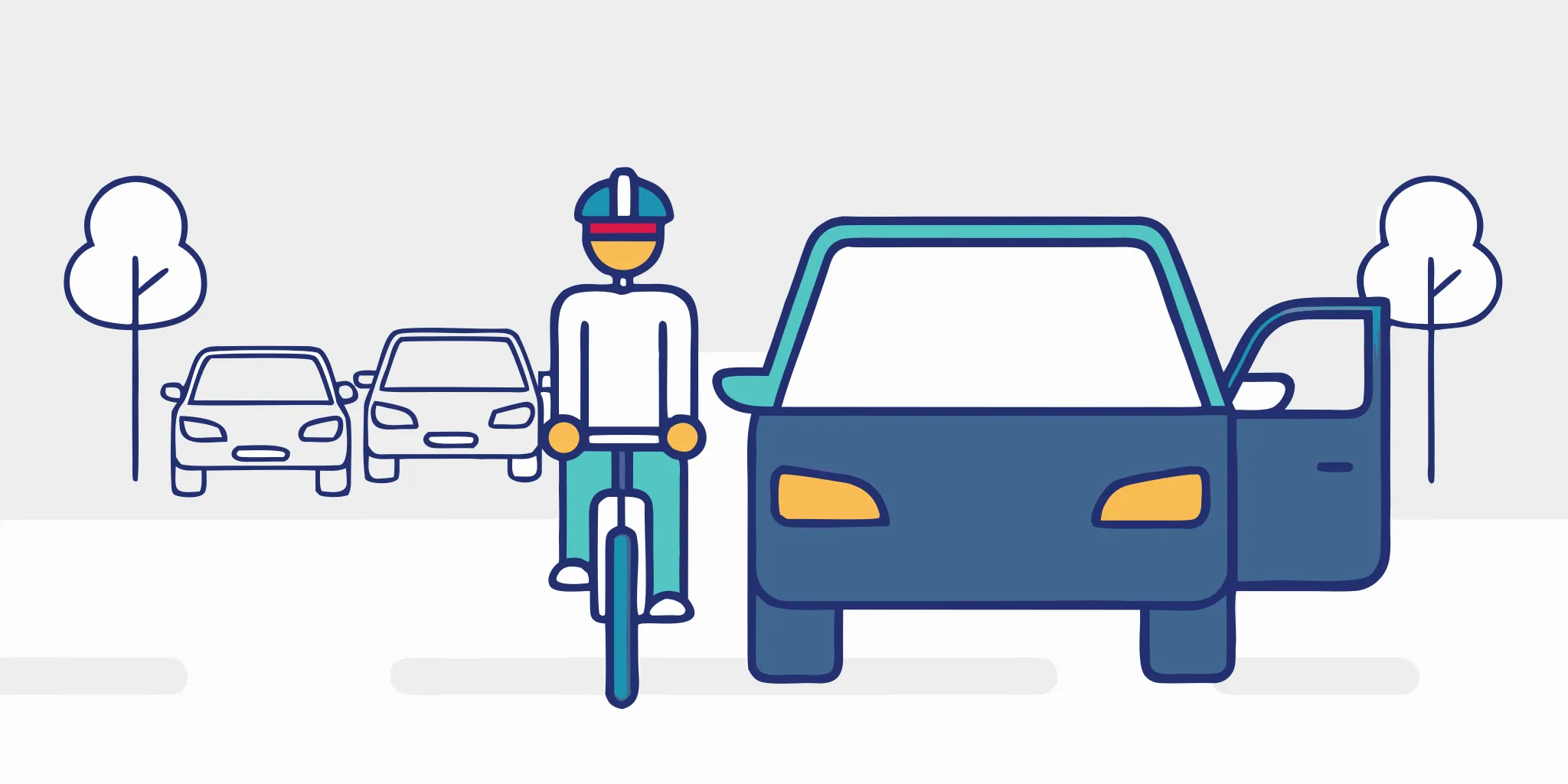
E-bike accidents can occur in various scenarios, including “dooring” incidents. A dooring accident happens when a vehicle occupant opens a door into the path of an oncoming e-biker, causing a collision. These incidents highlight the importance of driver awareness and caution when exiting parked vehicles near bike lanes.
Additionally, local governments may hold some responsibility if poor road design, lack of maintenance, or unsafe infrastructure contributes to an e-bike accident on public paths or roads. Determining liability can involve examining local regulations and road conditions. For more details on these specific types of incidents, see our full article on e-bike accident liability.
Navigating these claims requires understanding Florida’s traffic laws and personal injury statutes. Legal professionals can help evaluate the specifics of your case and pursue appropriate compensation. This includes reviewing police reports, witness statements, and accident reconstruction evidence to build a strong claim.
Wondering if you have a viable claim? You do not have to figure out Florida’s complex traffic laws on your own. Take a moment to request a free case evaluation with our experienced team to explore your options.
The Complexities of Insurance Coverage for E-Bike Riders
Getting insurance coverage after a Florida e-bike accident claim can be tricky. In Florida, most car owners use Personal Injury Protection (PIP) to pay for medical bills after a crash. But Florida law does not view e-bikes as motor vehicles. This means your own PIP likely will not cover your injuries if you are hurt while riding an e-bike. You must find other ways to pay for your care.
The PIP Rule for E-Bikes
In a standard car accident in Florida, PIP pays for 80% of your medical costs. However, Florida Statute 316.20655 treats e-bikes like normal bikes. Since they are not motor vehicles, they fall outside the PIP system. If a car hits you, the driver’s PIP might cover you as a pedestrian. However, this does not always happen, and many riders must rely on their own health insurance or a letter of protection to cover medical expenses.
Ways to Get Paid
If another driver caused your crash, you can seek money from their Bodily Injury (BI) plan. This can pay for your pain and lost wages. If the driver lacks enough insurance, you might use your own Uninsured Motorist (UM) plan if you have one. Some riders also use MedPay. This is an add-on to some car or home plans. It helps pay for medical bills that other plans do not cover.
E-Bike Insurance Options
Knowing which plan pays for what can help you maximize compensation for your e-bike accident. Every policy has different limits and rules for e-bike crashes.
| Coverage Type | Source | What It Pays For | E-Bike Use |
|---|---|---|---|
| Personal Injury Protection (PIP). | Your Auto Policy. | 80% of medical bills. | Rarely covers riders. |
| Bodily Injury (BI) Liability. | At-Fault Driver. | Pain and lost wages. | Main source of money. |
| Health Insurance. | Private Plan. | Doctor visits. | Used for quick care. |
| Uninsured Motorist (UM). | Your Auto Policy. | All costs if driver lacks BI. | Vital for hit-and-runs. |
| Medical Payments (MedPay). | Your Auto Policy. | Bills and co-pays. | May cover e-bike crashes. |
Evidence You Must Preserve After an E-Bike Crash
Winning a Florida e-bike accident claim often depends on the proof you get at the scene. Electric bikes have complex parts and go fast, so the facts you save now protect your rights later. You need clear proof to show the other driver was at fault. This helps you protect your rights if you experience delayed injury symptoms after a Florida accident. Taking a few steps right after the hit can make a big difference in your case.
Gather proof at the scene
If you can move safely, start by taking photos of the crash site. Focus on the spot where all vehicles landed, skid marks, and bike damage. Florida law treats e-bikes as vehicles with road rights under Florida Statute 316.20655. This means road rules apply just like they do for cars or standard bikes. Photos give a clear look at the weather, road state, and traffic signs at the time of the crash.
Protect these five items
Saving physical proof is vital for your injury claim. Do not fix your bike or wash your clothes until you speak with a lawyer. These items show how hard the impact was. Use these steps to build a strong base for your case:
- Capture the display screen. Take a photo of the data on your e-bike screen. This can show your speed, assist level, and the time of the crash.
- Find security cameras. Look for homes or stores with cameras nearby. These clips often show the exact moment the crash happened.
- Save your helmet and gear. Keep your torn clothes and cracked helmet. This physical proof shows the force of the hit and your injuries.
- Keep your medical records. Save every bill and note from the doctor. These papers prove the crash caused your health problems.
- Get the police report. Ask the officer for the case number. This official file is a key piece of proof for your claim.
Identify witnesses and footage
People who saw the crash can give a fair account of what took place. Ask for their names and phone numbers before they leave. Also, check for dashcam clips from other drivers who stopped to help. This kind of proof is hard for insurance firms to fight. By saving these details, you help your legal team show the other party was at fault.
Frequently Asked Questions
What is the new law for e-bikes in Florida?
E-bikes are legally recognized as bicycles under Florida law. According to Florida Statute 316.20655, riders have the same rights and duties as people on traditional bicycles. You do not need a license, registration, or insurance to ride an electric bicycle. Additionally, Florida law does not set a statewide minimum age to operate an e-bike. Though local cities and municipalities have the authority to establish their own age requirements and restrictions for public paths and roads.
How long do I have to file an e-bike accident claim in Florida?
You have two years from the date of the crash to file a lawsuit for your injuries. This time limit is set by Florida law for personal injury cases. Missing this critical deadline can prevent you from recovering compensation for medical bills or lost wages. It is vital to start your claim quickly to preserve evidence, capture e-bike data, and speak to people who witnessed the crash.
Can a spouse seek compensation for an e-bike injury in Florida?
Yes, the law allows a husband or wife to seek financial recovery for the negative impact an injury has on their marriage. This is known as a loss of consortium claim. It covers the loss of companionship, help, care, and affection caused by the crash. In some cases, children may also be eligible to seek compensation if their parent suffers a catastrophic or life-altering injury. These claims help families manage the long-term consequences of a severe accident.
How does the 51% rule affect my Florida e-bike accident claim?
Florida uses a modified comparative fault rule for shared blame. This means you can only recover money if you are not more than 50% at fault for the crash. If you are 51% or more at fault, you are legally barred from getting any money from other parties. If your share of blame is less than 50%, your final check will be reduced by your exact percentage of fault. Proving the other driver was negligent is a major part of any successful Florida e-bike accident claim.
Ready to Schedule a Florida E-Bike Accident Consultation?
Delaying your claim after a crash can cause you to lose vital proof and limit the money you get for your injuries and losses. Starting your case now gives your legal team the best chance to build a strong case while the physical evidence is still fresh. A quick start ensures you get the medical care you need and protects your legal rights against firms that want to pay you less.
Ready to schedule a free consultation? Contact our Florida legal team now to schedule a free consultation today. We can review your case and help you fight for the full financial payout you need to get your life back on track. Call us today to learn how we can help you.
About the Author
Katie Miller, Esq.
Managing Partner · Injury LawStars
Attorney Katie Miller was once an injury victim herself. After a car accident in 2016 that required spinal surgery and a 13-month recovery, she turned her experience into a mission: fighting for people who are hurting. With 17+ years of legal experience and over \$45 million recovered for clients, Katie brings both professional expertise and personal understanding to every case.