June 12, 2026
Construction Site Fall Claim Florida: Who Is Liable?

A fall on a construction site can leave a worker facing surgery, lost income, and urgent questions about who must pay. A construction site fall claim Florida workers pursue may involve more than the workers’ compensation system, especially when another company, an equipment maker, or a property owner helped cause the hazard.
Request a free review of your Florida construction fall claim.
Short answer: Workers’ compensation may provide medical and wage benefits without requiring proof that an employer was negligent. A separate third-party injury claim may also be possible when someone other than the worker’s employer caused the fall. Each path has different rules, evidence needs, and available damages.
The safest approach is to report the injury, get medical care, preserve the scene and equipment, and have every potentially responsible party reviewed. The first step is understanding how these two types of claims fit together.
Construction Site Fall Claim Florida: How a construction site fall claim in Florida works
A construction fall can trigger two legal tracks. The first is usually a workers’ compensation claim through the injured person’s employer. The second may be a negligence or product-liability claim against a third party. These claims can arise from the same fall, but they do not offer the same benefits or require the same proof.
Workers’ compensation benefits
Florida workers’ compensation is generally a no-fault system. An eligible worker does not usually need to prove that the employer caused the accident to seek covered medical care and part of lost wages. The worker must still follow notice, treatment, and claim procedures. Learn more about support for a Florida workers’ compensation claim.
Third-party injury claims
A third-party claim focuses on a person or business other than the injured worker’s employer. The claimant generally must show that the third party owed a duty, breached it, and caused harm. Depending on the facts, recoverable losses may include items that workers’ compensation does not cover, such as pain and suffering.
| Issue | Workers’ compensation | Third-party claim |
|---|---|---|
| Who is the claim against? | Usually the employer’s workers’ compensation insurer | A responsible person or company other than the employer |
| Must fault be proven? | Usually no | Usually yes |
| Potential recovery | Covered medical care and partial wage benefits | May include broader economic and non-economic losses |
| Key evidence | Injury report and medical records | Scene proof, contracts, equipment, witnesses, and records |
Why both tracks need close review
A busy jobsite can include a general contractor, several subcontractors, vendors, rented equipment, and a property owner. The name on a worker’s pay stub may tell only part of the story. Contracts, daily logs, safety plans, and site-control records can show who had the ability and duty to prevent the fall.
Workers’ compensation liens or reimbursement rights may also affect a third-party recovery. Because those issues can shape the net result, injured workers should get advice before signing a release or accepting a final settlement.
Who may be liable beyond workers’ compensation?
Short answer: A general contractor, subcontractor, equipment manufacturer, rental company, maintenance provider, vendor, or property owner may be liable when its negligence or defective product contributes to a construction fall. Liability depends on control, contracts, conduct, and the evidence preserved after the accident.
Workers’ compensation may not be the only source of recovery after a jobsite fall. Florida law generally limits lawsuits against an injured worker’s employer, but another person or business may remain accountable when its conduct caused the accident. If someone other than the employer created the danger, the worker may be able to bring a separate personal injury case.
Can you sue a third party?
When a person or company other than your employer is at fault, it is called a third-party claim. This is very common on construction sites. Many different crews and vendors work in the same space at once. If another crew leaves a spill or a tool in your path, they might be liable. You can get workers’ comp benefits and pursue a lawsuit against these other parties at the same time.
A construction site fall claim in Florida can involve many liable parties. For example, a property owner might fail to keep the site safe. A general contractor could also be at fault if they did not follow safety rules. Finding these parties takes a deep look into the facts of the site. At Injury LawStars, we advance all case costs to pay for these deep checks and expert help.
Common liable parties in fall cases
Many groups may share the blame for your injury. A subcontractor from a different company might have set up a ladder the wrong way. A vendor delivering heavy goods could also cause an accident by being careless. If a part like a harness or a rail breaks, the company that made it might be at fault. These cases often come down to proving that a specific group failed to do their job safely.
Filing a third-party claim can help you get more than just medical pay. Workers’ comp does not cover things like pain and suffering. A separate lawsuit can help you get money for those losses. This is why it is so important to find every person or company that played a role in your fall. Our firm works statewide in Florida to help victims find the right path forward after a bad injury.
How to find who is at fault
Finding the right person to sue is not always easy. Sites are busy and many groups work there at the same time. You need to see who was in charge of the area where you fell. You also need to check if the tools or gear you used were safe. Expert witnesses can help show where a safety rule was broken. We use our personal experience to fight for the full pay you need to recover.
Contractor and subcontractor liability after a fall
Many people who fall on a jobsite assume they can only get help from workers’ compensation. These benefits are vital, but they may not cover all your losses. On a busy site, many firms often work in the same space.
If a worker from another crew makes a mistake that leads to your fall, you may have a construction site fall claim Florida. This type of legal action is separate from your employer’s insurance. It can help you get full pay for your pain and suffering.
How jobsite control affects your case
Legal fault often depends on who had control over the area where you fell. General contractors usually have the duty to keep the site safe for all workers. They must set up safety rules and ensure that all crews follow them.
If a general contractor fails to manage the site well, they may be at fault for your injuries. This is true even if they did not cause the fall directly.
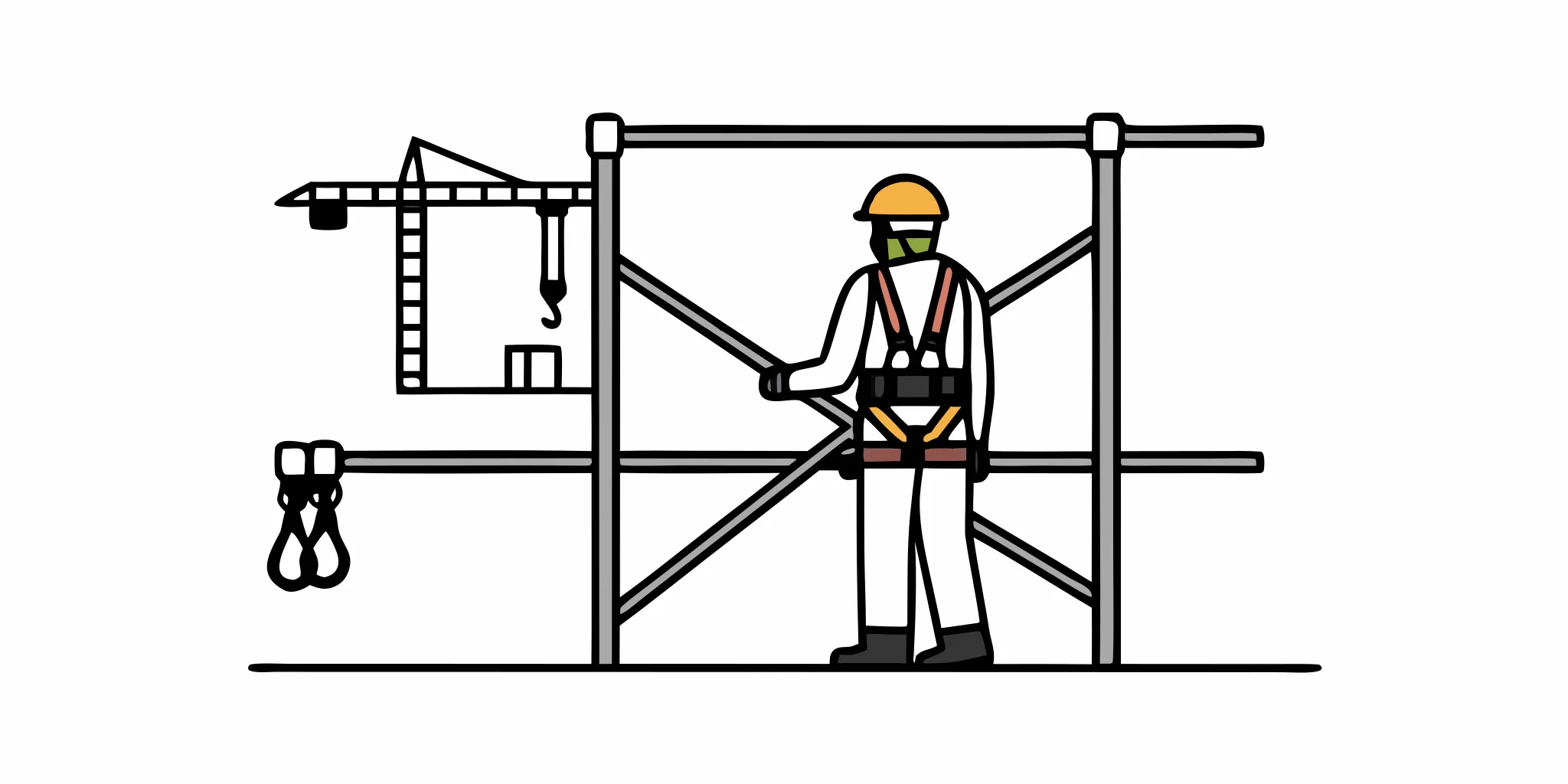
A detailed site investigation is often needed to determine who was in charge. For example, a firm might be responsible for a fall caused by unsafe scaffolding or missing guardrails. Our team reviews site logs and safety plans to identify these failures.
This work is part of how we build a strong case for you. We focus on who had the power to stop the hazard but failed to do so.
Liability for subcontractor safety failures
In many cases, an outside crew may leave a site in a dangerous state. They might leave debris in a walkway or fail to cover a hole in the floor. Florida law allows you to sue these third parties if their careless acts caused your fall.
Under Florida Statute 440.39, an injured worker can get workers’ comp and still sue a third party. This is a key right for people who face high medical bills and long recovery times.
Planning errors are a common cause of falls on sites with many crews. When two or more teams do not talk or plan well, safety gaps appear. One crew might move a ladder or remove a floor plate without telling others.
These small errors can lead to life-changing falls. Finding the firm that made the error is the first step in your claim. This process needs deep legal skill and a clear view of how sites run.
Moving beyond workers’ compensation
You do not have to prove that your own employer did something wrong to win a third-party claim. You only need to show that another firm’s worker was at fault.
While workers’ comp is often the exclusive remedy against your employer, it does not block other claims. If an outside team was careless, they must answer for the harm they caused. This path lets you seek pay that goes beyond what standard insurance provides.
Our firm works to find every liable party to help you get the best outcome. We know that construction is a high-risk job with many moving parts. Finding the right party is vital for a successful claim.
We pay for all experts and checks to make sure your case is strong. This lets you focus on your health while we handle the complex legal work.
Equipment and property-owner liability
Not every construction fall begins with another worker’s mistake. A ladder may buckle, a lift may fail, or a harness anchor may break. A hidden property condition can also put a crew at risk. These facts may point to responsible parties outside the injured worker’s employer.
Defective or poorly maintained equipment
Ladders, scaffolds, lifts, guardrails, harnesses, and anchors should be kept in a safe condition and used as intended. When equipment fails, the investigation should examine its design, manufacturing history, warnings, inspections, maintenance, and prior repairs. A manufacturer, rental company, supplier, or maintenance contractor may become part of the claim when its conduct contributed to the fall.
The equipment should be preserved in the same condition whenever possible. Do not let a broken part disappear, get repaired, or return to a rental fleet before it can be documented. Photos, serial numbers, manuals, receipts, inspection tags, and maintenance logs may help an expert determine what went wrong.
Property-owner responsibility
A property owner is not automatically liable for every construction injury on the premises. Responsibility often depends on what the owner knew, what control the owner kept, and which duties were assigned to contractors. An owner may face scrutiny when it created or knew about a dangerous condition and failed to address or warn about it.
Examples can include an unsafe access route, a concealed opening, unstable flooring, or another condition outside the contractor’s work. The exact analysis is fact-specific. Deeds, contracts, emails, inspection records, and site meeting notes can help show who controlled the area.
A complete liability investigation
A prompt investigation should follow the evidence instead of assuming only one party was responsible. The team at Injury LawStars can review potential claims involving a Florida construction accident, including the roles of contractors, equipment businesses, and property owners.
What evidence should you preserve after a construction fall?
Short answer: Preserve photos and video of the scene, witness contact details, incident reports, medical records, clothing, safety gear, defective equipment, and messages about the hazard. Prompt preservation matters because a busy construction site can change quickly and key equipment may be repaired or removed.
A jobsite fall can change a worker’s life in seconds. After urgent medical needs are addressed, preserving evidence is essential to a construction site fall claim Florida workers may bring. Evidence can show who controlled the area, what hazard caused the fall, and whether safety equipment failed. Delay can allow crucial proof to disappear.
Protect your physical health and your legal rights
Your first move must be to get help from a doctor. Even if you feel fine, some injuries do not show up right away. Medical records serve as the core of your case. They link your hurt to the fall. After you are safe, you must report the fall to your boss. Florida law has strict rules for work injury notice. Failing to report the fall quickly can put your benefits at risk.
- Seek medical care. Go to a doctor or ER right away. This creates a clear link between the accident and your injuries for a future injury claim.
- Report the fall. Tell your boss about the fall as soon as you can. Make sure they write a report and ask for a copy of it.
- Take photos and video. Use your phone to record the scene. Capture the exact spot where you fell, including any faulty gear, wet floors, or missing rails.
- Find witnesses. Get the names and phone numbers of anyone who saw you fall. Their words can help prove what happened if the company denies your claim.
- Save your gear. Do not throw away the boots, clothes, or safety tools you wore during the fall. These items may hold proof of why the fall took place.
- Stay off social media. Do not post about the fall or your hurt online. Insurance firms often check your posts to find reasons to pay you less.
Find the parties at fault
In Florida, you can often sue a third party if their neglect caused your fall. This might be a tool maker or a different team on the site. A third-party claim lets you seek more than just basic work pay. Saving proof like photos of bad scaffolding helps find these liable parties. Our firm can help look into these facts to build a strong case for you.
Stay careful with insurance firms
You may get calls from insurance agents soon after your fall. They might ask for a recorded talk or a signed form. It is best to wait and speak with a lawyer first. These agents want to save their firm money, not help you. If you give a statement too soon, you might say something that hurts your case later on.
Frequently Asked Questions
How much does a construction site fall lawyer cost in Florida?
Most Florida injury firms work on a fee model where you pay nothing to start. You do not owe any money upfront for your case. The firm only gets paid if they win a check for you. According to Injury LawStars, this helps people get a lawyer no matter how much money they have. You do not have to worry about bills while you try to get well. This model keeps the path to justice open for every worker.
Does a third-party lawsuit reduce my workers’ compensation benefits?
In Florida, you can file both a workers’ comp claim and a lawsuit against a third party. But Florida law says your boss or their insurance firm can ask for some money back. They may take a part of your pay to cover the help they already gave to you. This is called a set-off rule. It stops you from getting paid twice for the same hurt. A lawyer can help you see how much cash you will take home.
How common are construction site fall accidents in Florida?
Construction falls happen often and can be very deadly in Florida. The state has the second most job site deaths in the nation, behind only Texas. National data from the U.S. Bureau of Labor Statistics consistently identifies falls as a serious source of fatal workplace injuries in construction. The circumstances and available claims in each Florida accident require an individual investigation.
Do I have to pay for the experts needed to prove my fall claim?
To win a case, you may need a deep check of the site or help from experts. Injury LawStars pays for all these case costs for you. This includes the cost of expert witnesses and court fees. You do not have to pay these bills while your case is in court. If your lawyer wins your case, these costs are taken from the final check. This lets you build a strong claim without spending your own cash upfront.
Request a review of your Florida construction fall
A construction fall investigation should begin before the site changes, witnesses leave, or equipment disappears. Injury LawStars can review the accident, explain how workers’ compensation and possible third-party claims may interact, and identify the evidence that should be preserved.
Request a free case review with Injury LawStars to discuss your next steps.
About the Author
Katie Miller, Esq.
Managing Partner · Injury LawStars
Attorney Katie Miller was once an injury victim herself. After a car accident in 2016 that required spinal surgery and a 13-month recovery, she turned her experience into a mission: fighting for people who are hurting. With 17+ years of legal experience and over \$45 million recovered for clients, Katie brings both professional expertise and personal understanding to every case.